Lights Flicker When AC Turns On? What It Means and When to Call
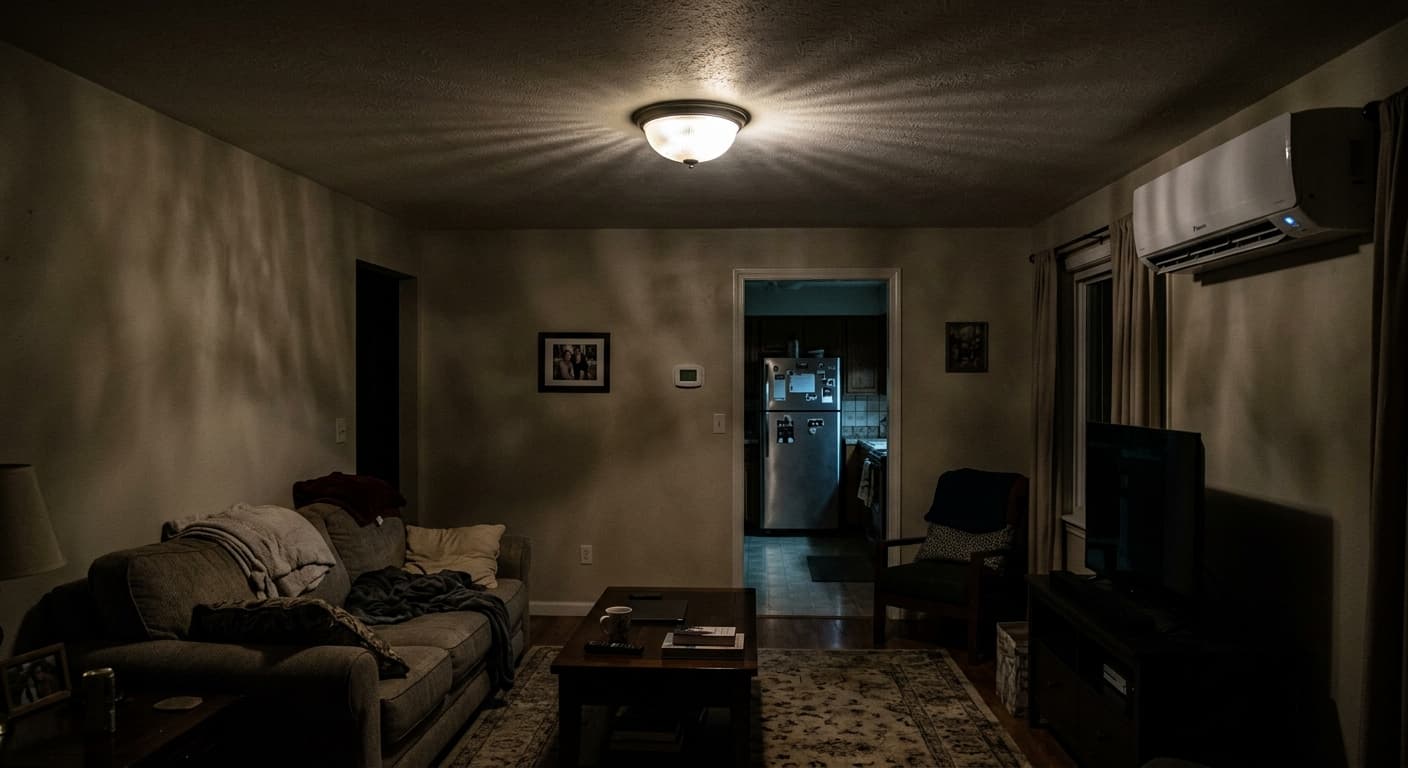
Lights flicker when the AC turns on because the compressor pulls a big rush of power for a split second, and the voltage in your house dips. A short dim at startup is common. A flicker that lasts, gets worse, or makes some lights brighter is a warning sign worth a call.
Why do lights flicker when the AC turns on?
An air conditioner's compressor is a motor, and a motor needs far more current to start than to keep running. For a fraction of a second, the AC pulls that startup rush (electricians call it inrush current) through the same panel and service wires your lights use. The voltage sags, and the lights show it.
How big the dip looks depends on how hard the compressor has to work to start, how solid every connection is between the pole and the AC, and how much room your electrical service has to spare.
So two houses on the same street can act differently. One has a healthy AC and tight connections, and nobody notices. The other has a tired capacitor, a loose lug in the panel, or a small service, and every cooling cycle shows up in the kitchen lights.
Is it normal for lights to dim when the AC kicks on?
A quick dim, once, right as the AC starts, is common and often harmless. People in brand-new homes ask about it too, and electricians who answer them online usually point to the startup surge. What matters is how long it lasts and whether it is changing.
The Electrical Safety Foundation puts flickering or dimming lights on the same list as buzzing, warm outlets and a burning smell: signs to have a qualified electrician inspect your system. Watch for these:
⚠ Call if you notice any of these
If some lights get brighter while others dim, unplug TVs and computers and call right away. That pattern can mean a failing neutral connection, in your panel or in the line from the pole. The neutral is the wire that carries current back on every circuit, and when it fails it can send higher voltage to some circuits, which damages electronics and is a fire risk.
Is it the AC or the house? 5 checks you can do safely
You do not need to open anything to narrow it down. Watch, listen and compare.
Before you call
| What you notice | Most likely cause | Who handles it |
|---|---|---|
| Whole house blinks once at startup, nothing else wrong | Normal startup surge | Usually nothing to do |
| Outdoor unit hums or struggles, dim lasts longer | AC: capacitor or compressor | AK HVAC team |
| Dryer or microwave causes it too | House wiring or panel | AK Electrical |
| Only one room dips | That circuit | AK Electrical |
| Some lights get brighter | Neutral connection | Call now: AK Electrical or Ohio Edison |
| Neighbors dip at the same time | Utility transformer or line | Ohio Edison (FirstEnergy) |
Causes at the air conditioner
When the AC is the problem, it is usually making the startup harder than it should be. A harder start means a bigger surge, held longer.
A weak capacitor
The capacitor is a can-shaped part in the outdoor unit that helps the compressor and fan motor start and run. As it weakens, the compressor struggles to get going and pulls high current for longer. Since July 2026, AK HVAC techs have replaced capacitors on more than 20 service calls in Warren, Niles, Cortland, Girard and Youngstown.
A worn compressor
An aging compressor can need more current to start than it did when it was new. A tech can measure the startup draw and compare it to the rating on the unit's nameplate.
A loose connection at the disconnect
The disconnect box on the wall beside the outdoor unit has its own wire connections. Ohio summers and winters, plus years of vibration, can loosen them. A loose connection adds resistance, and resistance makes every start dip harder.
No soft-start kit
A soft-start kit is an add-on that eases the compressor up to speed instead of slamming it on, which cuts the startup surge. It does not fix a bad capacitor or a loose wire, so those get checked first. An HVAC tech can tell you whether your unit is a good fit for one.
Need a Plumber or Waterproofing Expert?
Our team is available 24/7 for emergencies. Call now or schedule online.
The AK HVAC team (AK Heating & Cooling, our sister company in the AK family) handles the air conditioner side. Our AC repair page explains what they check.
Causes in your wiring and panel
If the dryer or microwave makes the lights dip too, the AC is probably just the biggest load exposing a weak spot in the house.
A shared circuit
Window units and portable ACs plug into the nearest outlet, which is often on the same circuit as the room's lights. People who buy a portable AC often post online that the lights dim every time it cycles. That one has a simple answer: move the unit to another circuit, or add a dedicated one.
A loose connection in the panel
Every breaker in your panel is a connection point, and so are the main lugs where the service wires land. A loose one makes every big load dip harder, and it heats up while it does. Take this one seriously. Loose connections get worse, not better.
Wiring mistakes from earlier work
In one Warren home, an AK electrician came out because a second-floor breaker kept tripping. The breaker had failed, but the bigger find was what earlier work by others had left behind: stairway switches wired to the ground, and a bedroom outlet tied into the wrong wire. All of it was corrected before the circuit went back on. In another Warren home, the fault was a broken wire inside a wall, and the only way to fix it was to open the wall.
Swapping a bulb or a breaker would not have found either problem. That is why we test before we replace anything.
An older or smaller electrical service
Some older homes still run on a 100-amp service. Add central air, an electric dryer and a modern kitchen, and there is less room to absorb a startup surge. AK electricians have upgraded 100-amp panels and service in older homes in Warren and Leavittsburg. If your panel also runs warm, buzzes or trips often, read the signs your panel is overloaded, and see our panel upgrades page.
Causes on the utility's side
Sometimes the weak spot is outside your house. Homes on a street often share one transformer, and the line from the pole ages like everything else. In the Mahoning Valley, that equipment belongs to Ohio Edison (FirstEnergy).
Two clues point here. Your neighbors see the same dip, or the flicker gets worse on the hottest afternoons when every AC on the street is running. If an AK electrician tests your panel and finds the voltage already low where it comes in, the fix belongs to Ohio Edison, and we will tell you so.
Lights flicker when other appliances turn on
The fridge compressor, the microwave, the clothes dryer, the vacuum and the furnace blower all pull a burst of current when they start. They are smaller than an AC compressor, so the dip is usually smaller and stays on the circuit they share.
If the lights dim every time the fridge kicks on, check whether the fridge shares a circuit with those lights. A microwave or vacuum that dims the room it is in is usually on a busy circuit.
Sometimes the appliance is not the problem at all. A Youngstown homeowner called because the microwave kept pulsing and acting up. The microwave was fine. The circuit had the wrong breaker on it, and once our electrician installed the right one, the microwave worked normally.
What the fix usually is
| Cause | Usual fix | Who |
|---|---|---|
| Weak capacitor | Replace the capacitor | AK HVAC team |
| Hard-starting compressor | Test it; a soft-start kit if the unit is a fit | AK HVAC team |
| Loose connection at the disconnect or panel | Tighten or replace the connection or breaker | AK Electrical |
| Shared circuit | Move the load or add a dedicated circuit | AK Electrical |
| Wrong or failed breaker | Replace the breaker | AK Electrical |
| Small or older service | Panel and service upgrade | AK Electrical |
| Utility transformer or line | Report it to Ohio Edison | Ohio Edison |
We do not list prices here, because the fix depends on what the test finds. A capacitor and a panel upgrade are very different jobs.
What AK checks when your lights flicker
Flickering lights: common questions
Lights Dipping Every Time the AC Starts?
AK tests the AC, the circuit and the panel, then tells you which one is the problem before anything gets replaced. We serve Warren, Youngstown, Niles, Boardman and the rest of the Mahoning Valley.
Need Help With Your Plumbing?
Our team is ready to help with any plumbing or waterproofing need.
Related Articles
Prep Your Home Electrical System for Winter Storms
A Northeast Ohio winter tests your home's electrical system with outages, ice, and overloaded space heaters. Here's the prep checklist that keeps the lights, the furnace, and the sump pump running.
Read More
Is Your Older Warren-Area Home Due for Rewiring? Knob-and-Tube & Aluminum Wiring
Older Warren-area homes often hide knob-and-tube or aluminum wiring never built for a modern electrical load. How to spot it, the fire and insurance risks, and what a rewire involves.
Read More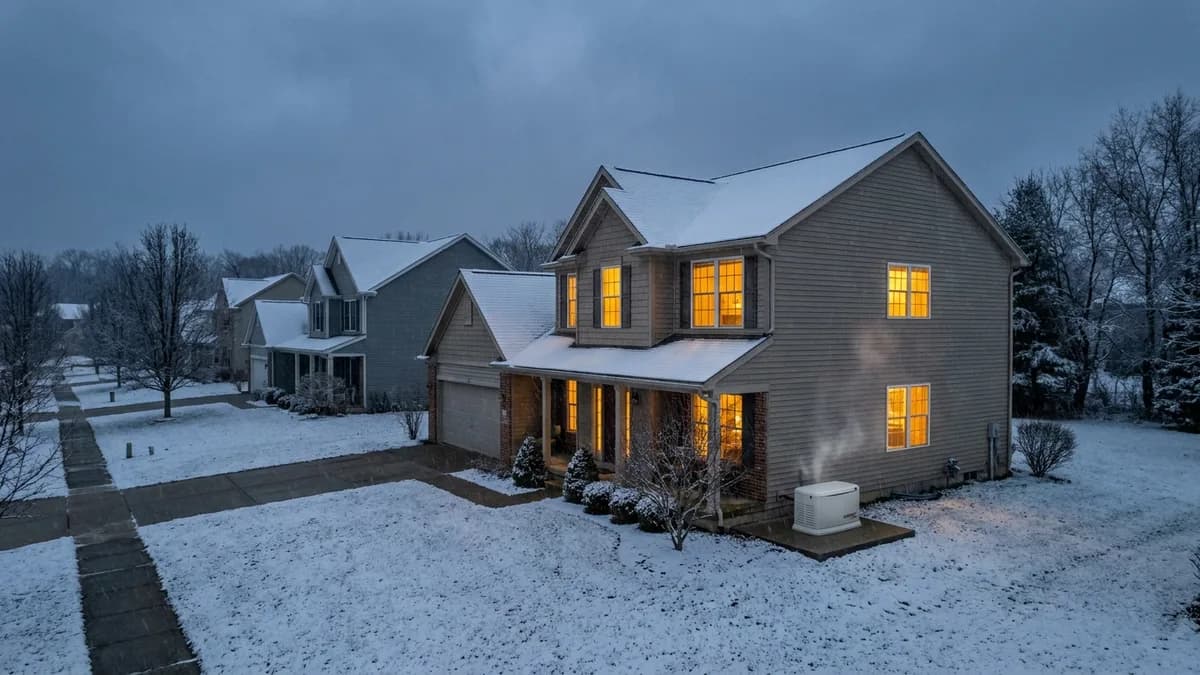
Do You Need a Whole-Home Generator in Northeast Ohio?
Northeast Ohio storms and ice knock out power every year. Here's how to decide if a whole-home standby generator is worth it for your Warren-area home, what it protects, sizing basics, and who does what.
Read More