Signs Your Electrical Panel Is Overloaded (Before It Becomes a Fire Risk)
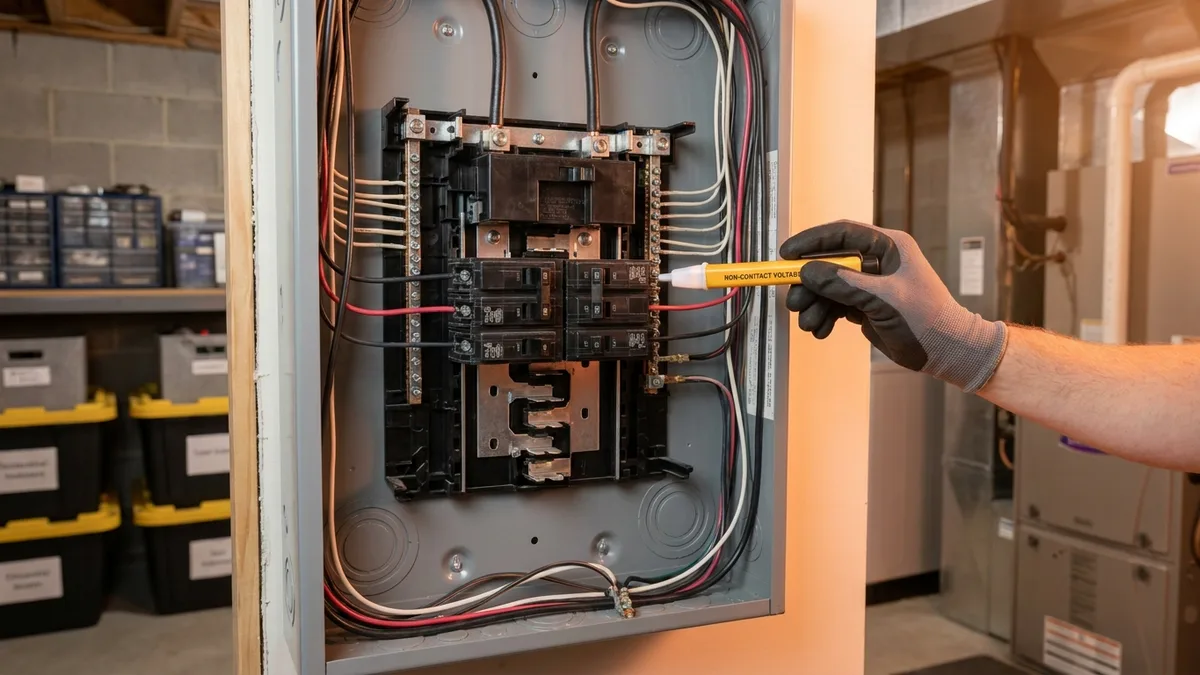
The most common signs of an overloaded electrical panel are breakers that trip again and again, a panel that feels warm to the touch, lights that flicker or dim when an appliance kicks on, and a buzzing or crackling sound at the panel. A burning or hot-plastic smell is in a different category — that’s an emergency: shut off the main breaker if you can do it safely and call an electrician immediately. AK Water Works diagnoses overloaded panels and installs upgrades across Warren and the Mahoning Valley, 24/7, at (330) 574-1507.
The Warning Signs Your Electrical Panel Is Overloaded
Your electrical panel — the gray metal box of breakers in your basement, garage, or utility room — is the heart of your home’s electrical system. It splits incoming power into circuits and is supposed to shut a circuit off before it draws more than it can safely handle. When a panel is overloaded, it’s being asked to move more electricity than it was built for, and it starts to tell you so. Here are the signs, from mildest to most serious.
| What You Notice | What It Usually Means | How Urgent |
|---|---|---|
| Breakers trip repeatedly | A circuit is drawing more than its rated amps | Diagnose soon |
| Flickering or dimming lights | Voltage sags when a big load starts up | Call soon |
| Panel or breakers warm to the touch | Overload or a loose connection making heat | Call promptly |
| Buzzing, humming, or crackling | A loose or failing breaker; arcing | Call promptly |
| Power strips & extension cords everywhere | Too few circuits for how you actually live | Plan an upgrade |
| Burning smell or scorch marks | Active overheating or arcing | Emergency — now |
1. Breakers that trip over and over
A breaker doing its job once in a while is normal — that’s the safety device working. But a breaker that trips repeatedly, especially when you run two things at once (say the central air kicks on while the microwave is going), is telling you that circuit is regularly pushed past its limit. If you find yourself walking to the panel to reset the same breaker again and again, that circuit — or the whole panel — is overloaded.
2. Lights that flicker or dim when something turns on
If your lights dip or flicker the moment the AC compressor, a vacuum, or a power tool starts up, the panel is struggling to deliver enough current for the surge. An occasional dimming on a huge motor load can be normal, but frequent, house-wide flickering points to an overloaded system or a failing connection that needs a licensed electrician to trace.
3. A panel or breakers that feel warm
An electrical panel should feel cool. If the metal cover, or a specific breaker, is warm or hot to the touch, heat is building up where it shouldn’t — usually from an overloaded circuit or a loose connection. You can carefully lay the back of your hand flat against the closed panel cover to check, but never open the panel yourself. Warm-to-hot is a call-an-electrician sign, not a wait-and-see one.
4. Buzzing, humming, or crackling from the panel
A healthy panel is silent. A steady buzz, hum, or intermittent crackle usually means a breaker isn’t seating or tripping the way it should, or electricity is arcing across a loose connection. Arcing is how electrical fires start, so any sound coming from the panel deserves a prompt professional look.
5. You’ve got power strips and extension cords everywhere
This one hides in plain sight. If nearly every room runs on power strips, cube taps, and daisy-chained extension cords, the real problem isn’t that you need more outlets — it’s that your home has too few circuits for the way you actually use electricity today. Overloading outlets this way is one of the most common ways homeowners quietly push a panel past its capacity.
The One Sign That Means Stop and Call Now
A burning smell — hot plastic or a fishy, acrid odor — coming from your panel or an outlet, along with scorch marks, discoloration, or visible sparks, means something is already overheating or arcing. This is not a “book it for next week” problem. If you can safely reach the panel, switch off the main breaker to cut power to the house, then call a licensed electrician right away.
A burning smell is the point where an overloaded or failing panel stops being a nuisance and becomes a fire risk. Electrical problems are behind a large share of home fires every year, and the warning almost always comes through your nose before you see flames. Don’t hunt for the source, don’t keep using the circuit, and don’t wait to see if the smell goes away. AK Water Works answers emergency electrical repair and troubleshooting calls 24/7 across the Mahoning Valley at (330) 574-1507 — when a panel is hot or smells like it’s burning, that’s exactly the call to make.
If you ever see actual flames or smoke, skip the troubleshooting entirely: get everyone out of the house and call 911 first. Handle the electrical repair after the fire department has made it safe.
Why Electrical Panels Get Overloaded
Most overloaded panels aren’t the result of anything you did wrong — they’re the result of a house keeping up with modern life on an older electrical system. Many Warren, Niles, and Youngstown-area homes were wired decades ago for a fraction of the electrical demand a family puts on them today.
An overload happens one of two ways: a single circuit is asked to carry more than its breaker is rated for, or the whole panel is asked to supply more total power than its main service can deliver. Here’s what has changed to push panels toward that limit:
- Central air conditioning — a major, motor-driven load added to homes that never had it
- EV chargers — a Level 2 charger can draw as much as the rest of the house combined
- Additions & finished basements — new rooms, new circuits, same old panel
- Hot tubs, workshops, and big appliances — each wants its own dedicated circuit
- 60–100 amp service in homes that now need 200
- A full panel with no open slots for new circuits
- Fuse boxes and older equipment never designed for today’s load
- Loose connections that worsen with every heat-and-cool cycle
When you stack a central AC system, a car charger, and a kitchen full of modern appliances onto a panel sized for a 1970s household, tripping breakers and warm panels aren’t surprising — they’re predictable.
Why Summer Is When Overloaded Panels Show Up
If your breakers started tripping around the time the Ohio heat set in, that’s no coincidence. Summer is peak season for overloaded panels, and air conditioning is the reason.
A central air conditioner is one of the largest, most demanding loads in a typical home, and it cycles on and off all day during a Mahoning Valley heat wave. Every time the compressor starts, it pulls a big surge of current — well above what it draws while running. Add window units, fans, a pool pump, and everything else you run in July, and a panel that coasted through spring suddenly finds its limit. The heat itself doesn’t help either: high ambient temperatures give an already-warm panel less room to shed heat.
If a breaker trips the moment your AC kicks on, resist the urge to just keep resetting it. A breaker that trips under AC load is warning you the circuit is overloaded or the connection is failing — and forcing it back on repeatedly stresses the very component that’s meant to prevent a fire.
What to Do If You Spot the Signs
Need a Plumber or Waterproofing Expert?
Our team is available 24/7 for emergencies. Call now or schedule online.
Short of the emergency situation above, here’s the sensible order of operations when you suspect your panel is overloaded.
Stop running several heavy appliances on the same circuit at once. Move the microwave, space heater, or window AC to a different outlet on a different circuit, and unplug what you’re not using. If that stops the tripping, you’ve confirmed an overload.
Write down which breaker trips, what was running when it did, and whether the panel felt warm or made noise. That two-minute log tells an electrician far more than “it keeps tripping” and speeds up the diagnosis.
It’s the single most dangerous “fix” a homeowner can try — and we call it out on its own below.
An electrician can measure what your panel is actually carrying, find loose or overheating connections, and tell you whether you need a new dedicated circuit or a full panel upgrade. This is the step that actually solves it.
Never swap a tripping breaker for a higher-amp one to stop the nuisance. The breaker is sized to protect the wire behind it. Put a 20-amp breaker on wiring rated for 15 amps and the breaker will happily let the wire overheat instead of tripping — which is exactly how overloaded circuits start fires inside your walls. If a breaker keeps tripping, the answer is a proper repair or upgrade, never a bigger breaker.
When an Overloaded Panel Means It’s Time to Upgrade
Sometimes the fix is simple — a dedicated circuit for the one hungry appliance that keeps tripping its breaker. But often, repeated overloads are a sign the panel itself has been outgrown. You’re likely looking at a panel upgrade when several of these are true:
Signs You’ve Outgrown Your Panel
| Service Size | Typically Found In | Handles Today’s Loads? |
|---|---|---|
| 60 amp | Older, un-upgraded homes | No — upgrade recommended |
| 100 amp | Mid-century & many older homes | Tight — often maxed by AC + EV |
| 200 amp | Modern standard | Yes — room for AC, EV & more |
A modern 200-amp service is the standard we install for most homes, because it leaves real headroom for central air, an EV charger, and the circuits a growing household adds over time. A panel upgrade is code-sensitive work — it’s permitted and inspected — so it belongs with a licensed electrician, not a weekend project. You can see the full scope on our panel upgrades page, and the rest of what we do on the electrical services hub.
Not sure whether you need a whole new panel or just a repair? That’s exactly what a load evaluation answers. Our team measures what your panel is actually carrying and tells you the smallest fix that truly solves the problem — sometimes it’s a single dedicated circuit, sometimes it’s a service upgrade.
Frequently Asked Questions
The clearest signs are breakers that trip repeatedly, a panel or breakers that feel warm to the touch, lights that flicker or dim when appliances start up, and a buzzing or crackling sound at the panel. Relying on power strips and extension cords throughout the house is another common sign. A burning smell or scorch marks is the most serious — treat that as an emergency and cut power at the main breaker.
It can be. An overloaded panel builds up heat and can arc at loose or failing connections, and electrical faults are behind a large share of home fires. Occasional tripping is the safety system doing its job, but persistent tripping, a warm panel, buzzing, or any burning smell means the risk is rising and you should have a licensed electrician look at it promptly.
Air conditioning is usually the culprit. A central AC compressor is a large load that draws a big surge of current every time it starts, and it cycles constantly during a heat wave. Stack that on top of fans, window units, and everything else you run in July, and a panel that was fine in spring hits its limit. Summer heat also leaves an already-warm panel less room to cool off.
No — this is dangerous. The breaker is sized to protect the wire behind it. Installing a higher-amp breaker lets the wiring carry more current than it’s rated for, so instead of tripping, the wire overheats inside your walls. That is a genuine fire hazard. A breaker that keeps tripping needs a proper repair, a new dedicated circuit, or a panel upgrade — never a bigger breaker.
Not always. If one circuit is overloaded, the fix may be as simple as adding a dedicated circuit for the appliance that keeps tripping it. But if breakers trip across multiple circuits, the panel is full, or you still have 60- or 100-amp service, that usually points to a panel upgrade — typically to a 200-amp service. A load evaluation tells you which one you actually need.
Often, yes. Central air and Level 2 EV chargers are both large loads, and many older homes on 100-amp service don’t have the spare capacity for them. Upgrading to 200-amp service before or alongside the new equipment gives your panel the headroom to run it safely — and it’s far cheaper to size up once than to upgrade twice.
AK Water Works handles electrical panel diagnosis, repairs, and upgrades across Warren, Niles, Youngstown, Boardman, and the rest of the Mahoning Valley, under Ohio Electrical License #38179. We answer 24/7 at (330) 574-1507 — and if your panel is hot or smells like it’s burning, call right away.
Panel Tripping, Warm, or Buzzing? Let’s Take a Look.
AK Water Works diagnoses overloaded electrical panels and installs safe, modern 200-amp upgrades across Warren, Youngstown, Niles, Boardman, and all of Northeast Ohio. Licensed, 24/7, and answered by a local family-owned team.
Need Help With Your Plumbing?
Our team is ready to help with any plumbing or waterproofing need.
Related Articles
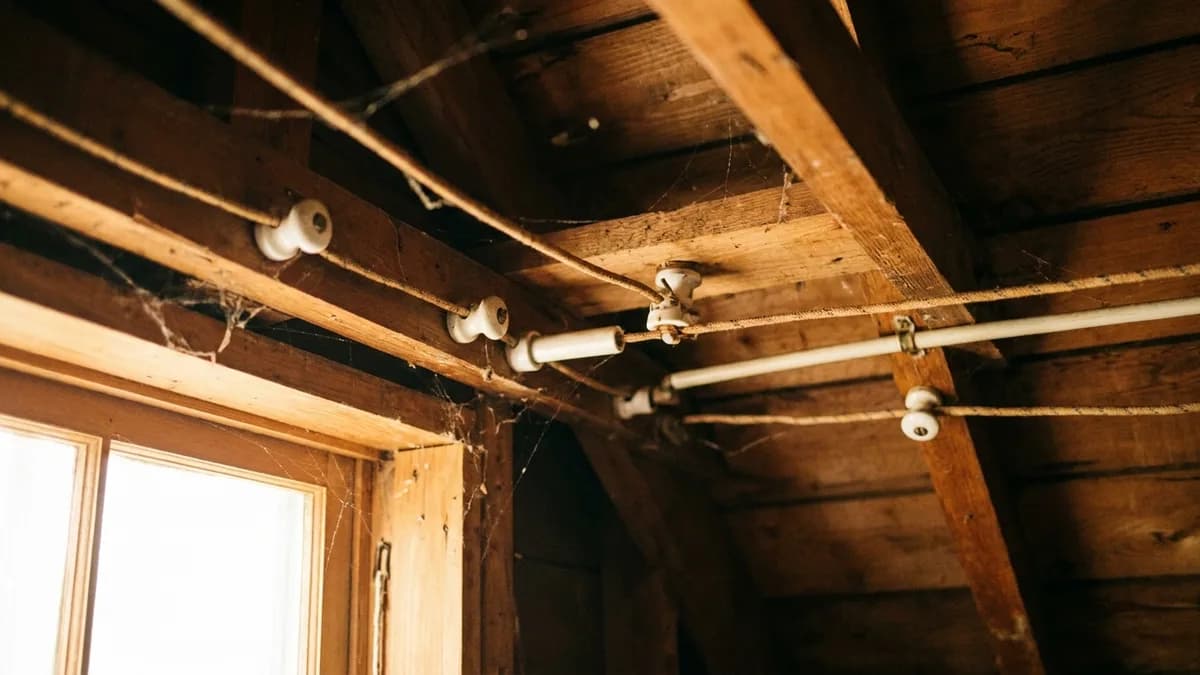
Is Your Older Warren-Area Home Due for Rewiring? Knob-and-Tube & Aluminum Wiring
Older Warren-area homes often hide knob-and-tube or aluminum wiring never built for a modern electrical load. How to spot it, the fire and insurance risks, and what a rewire involves.
Read More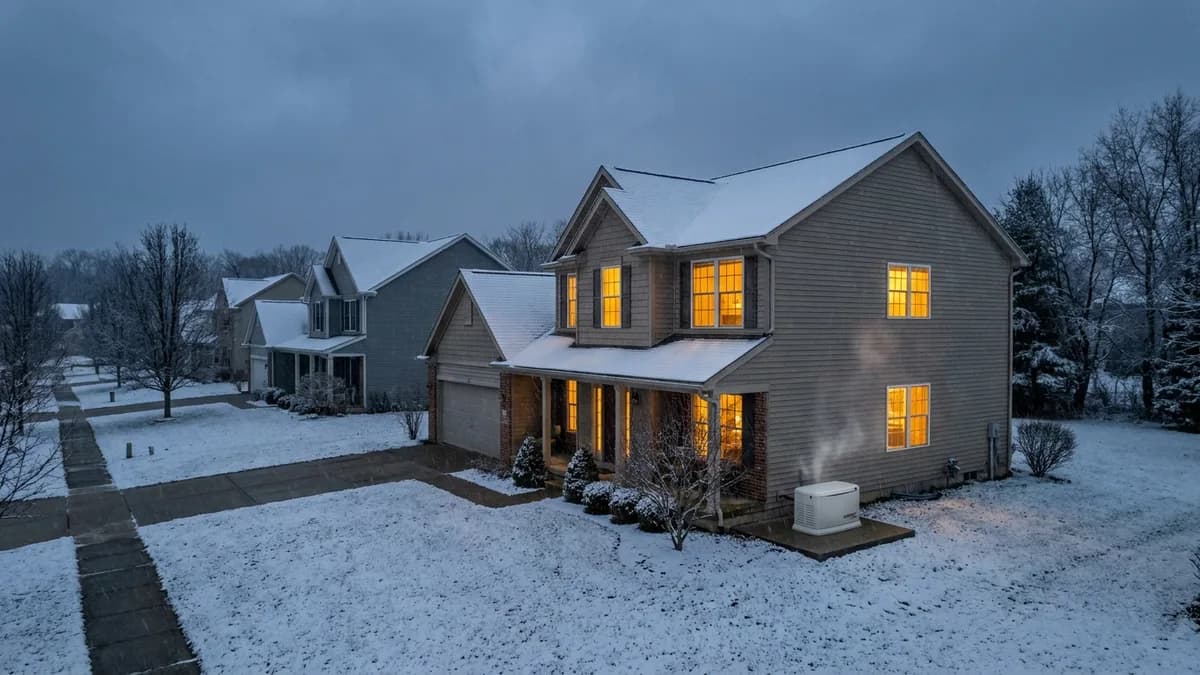
Do You Need a Whole-Home Generator in Northeast Ohio?
Northeast Ohio storms and ice knock out power every year. Here's how to decide if a whole-home standby generator is worth it for your Warren-area home, what it protects, sizing basics, and who does what.
Read More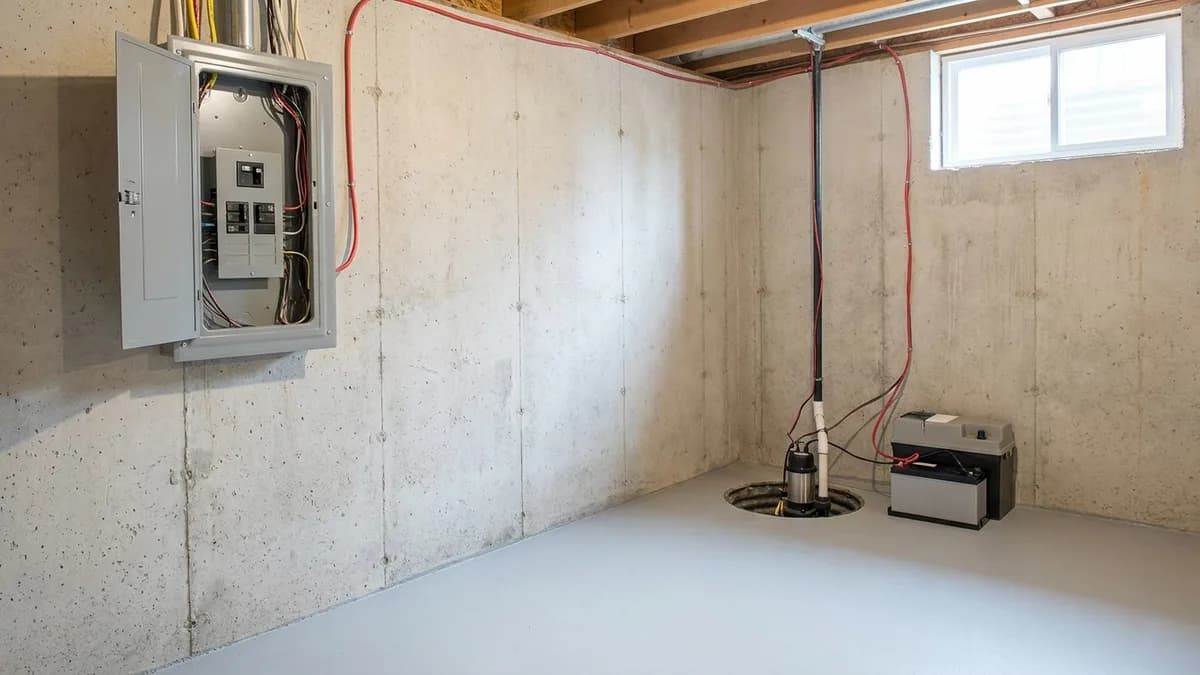
Why Your Sump Pump Needs Its Own Circuit and a Battery Backup
The day your sump pump matters most is the day a storm overloads its circuit or cuts the power entirely. Here is why a dedicated circuit plus a battery backup is the electrical half of a dry basement, what the code actually requires, and why one Warren company can handle the waterproofing, the pump, and the wiring together.
Read More