
Water Softener vs Whole-House Filter: What Valley Water Needs
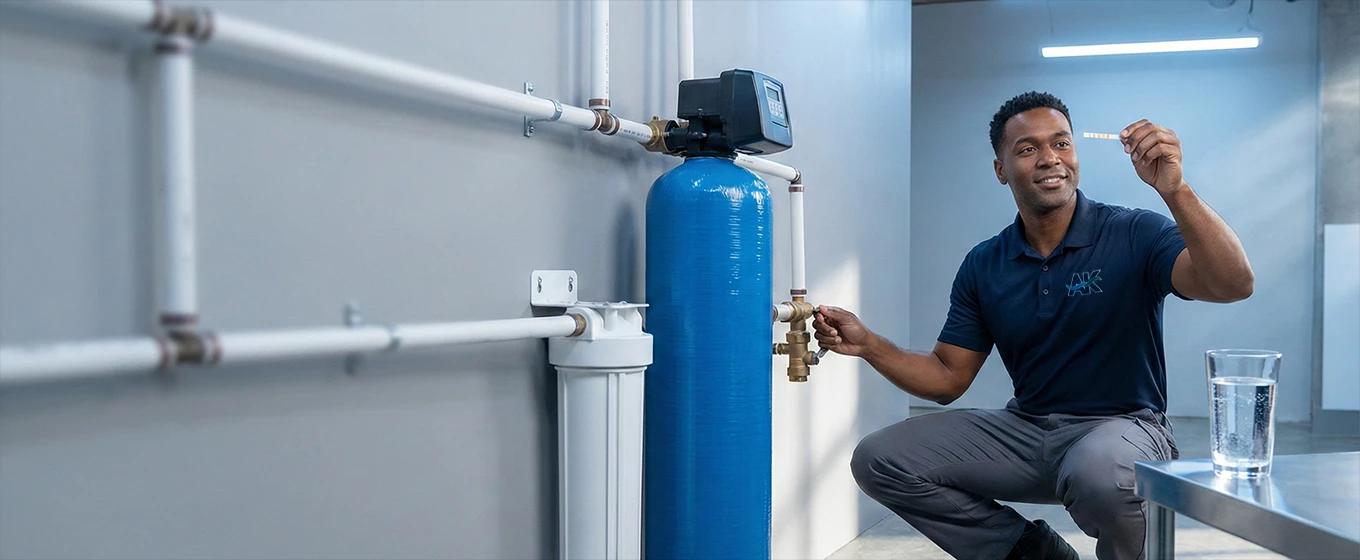
A water softener removes hardness (calcium and magnesium). A whole-house filter removes things like chlorine taste, sediment or iron. They fix different problems. On city water in the Valley, hardness is only moderate: 92 ppm in Warren and 80 ppm on Meander water (Youngstown, Niles, Austintown, Boardman), per the 2025 water reports. So many city homes want a filter first, and a softener only if scale bugs them. On a private well, Ohio EPA data puts typical hardness at 212–352 ppm (very hard), often with iron. Most well homes need a softener, and many need both.
What Each One Does
People use the two words as if they mean the same thing. They do not. Buying the wrong one is the most common water treatment mistake we see.
Removes: calcium and magnesium (hardness), plus small amounts of iron.
Fixes: white crust on faucets, spots on glasses, soap that will not lather, scale in the water heater.
Does NOT remove: chlorine, chloramine, lead, sediment, bacteria or bad smells.
How: a resin tank trades hardness for sodium. It cleans itself with salt from a brine tank.
Removes: depends on the media. Carbon takes out chlorine taste and smell. Sediment filters catch grit. Iron filters take out iron.
Fixes: pool smell in the shower, bad taste, grit in aerators, orange stains (iron filter).
Does NOT remove: hardness. Scale keeps forming with a filter alone.
How: water passes through a tank or cartridge of media. The media gets used up and is replaced.
Salt-free “conditioners” are a third type. They change how minerals form scale, but they do not soften. Your water tests the same hardness after one.
How Hard Is Valley Water? The Real Numbers
Most softener ads say Ohio water is “very hard.” For a lot of the state, that is true. For city water in Trumbull and Mahoning counties, the utilities’ own reports say something else. Here is what the latest reports show, rated on the U.S. Geological Survey scale (0–60 ppm soft, 61–120 moderately hard, 121–180 hard, over 180 very hard).
| Your water | Source | Hardness | Grains per gallon | Rating |
|---|---|---|---|---|
| City of Warren water Warren, Warren Twp, Bazetta, Champion | Mosquito Creek Reservoir | 92 ppm (2025 avg) | 5.4 | Moderately hard |
| Meander water (MVSD) Youngstown, Niles, McDonald, Austintown, Boardman, Liberty, Canfield, Girard, Howland, Mineral Ridge Some streets in these areas are on a different supplier. Your water bill names yours. | Meander Creek Reservoir | 80 ppm (2025 avg) | 4.7 | Moderately hard |
| Aqua Ohio, Struthers Division | Lake Evans | Not listed in the 2024 report | — | Test to know |
| Private well, sandstone (Ohio median) | Bedrock aquifer | 212 ppm | 12.4 | Very hard |
| Private well, sand and gravel (Ohio median) | Glacial aquifer | 352 ppm | 20.6 | Very hard |
Sources: Warren and Meander hardness are from Trumbull County’s 2025 water reports for the Warren Township system (water bought from the City of Warren) and the Howland system (Meander water through Niles). The towns Meander water reaches come from Youngstown’s 2025 water quality report and the county reports. Aqua figures are from its 2024 Struthers report. Well figures are statewide raw-water medians from Ohio EPA’s Major Aquifers in Ohio and Associated Water Quality (2014).
Your dishwasher or softener asks for hardness in grains per gallon. To convert ppm, divide by 17.1. Warren water: 92 ÷ 17.1 = about 5.4 grains.
Why is Meander water softer than raw lake water? Youngstown’s report says treatment at the Mahoning Valley Sanitary District “includes chemical addition for softening.” Part of the job is done before the water reaches your street.
On City Water: Hardness Is Mild, Chlorine Is the Bigger Complaint
At 80–92 ppm, Valley city water sits in the middle of the “moderately hard” band. You will still see some white spotting on glass shower doors and a little crust on aerators. But it is not the heavy scale that wrecks water heaters in very hard areas.
What city customers notice more is the disinfectant. Utilities must keep it in the pipes all the way to your tap:
- Warren: 1.65 ppm total chlorine (City of Warren 2024 report)
- Youngstown: 2.25 ppm average, up to 3.11 ppm (2025 report)
- Aqua Struthers: 3.1 ppm chloramines (2024 report)
Trumbull County’s reports list the disinfectant in Warren and Meander water as chloramines (chlorine plus ammonia). That matters when you shop for a filter.
Standard carbon is built for chlorine. Chloramine takes more contact time or a catalytic carbon. In the NSF certified product listings, “chlorine reduction” and “chloramine reduction” are separate claims. If your water is chloraminated, buy a filter certified for chloramine.
Both cities met the federal limit for disinfection byproducts (TTHMs) in their latest reports: about 71 ppb in Warren and 73 ppb in Youngstown, against a limit of 80. If you want those lower at the kitchen tap, look for a filter certified to NSF/ANSI 53 for that claim.
When a softener still makes sense on city water
- You are tired of spots on dishes and glass, and you want them gone, not just reduced.
- You have a tankless water heater. Its small heat exchanger is the part most sensitive to scale.
- Your household runs a lot of hot water, so scale builds faster in the water heater. Popping and rumbling from the tank is often scale; our water heater noise guide explains it.
Need a Plumber or Waterproofing Expert?
Our team is available 24/7 for emergencies. Call now or schedule online.
If none of those bother you, a softener on moderately hard city water is a comfort upgrade, not a must. A carbon filter is often the better first buy.
On a Well: You Likely Need a Softener, and Maybe More
Well water is a different story. Ohio EPA says sandstone is the main bedrock aquifer in eastern Ohio, and glacial sand and gravel lies on top of it in many valleys. Raw water from those two aquifer types tests at a median of 212 ppm and 352 ppm hardness. Both are “very hard,” two to four times harder than city water here.
Iron is the second problem. The federal secondary (taste and staining) standard is 300 µg/L. Ohio EPA’s median for sandstone wells is 430 µg/L, and for sand and gravel wells 1,000 µg/L. In plain terms: more than half of the wells in Ohio EPA’s data carry enough iron to stain sinks, toilets and laundry orange.
A common well setup
Well water also has no utility testing it for you. Low pressure, a short-cycling pump or a sudden change in taste can be pump problems, not water quality. Our well pump team checks both.
Match the Problem to the Fix
Start from what you see, smell or taste. The fix follows from the cause.
| What you notice | Likely cause | What fixes it |
|---|---|---|
| White crust on faucets, spots on glasses, stiff towels | Hardness | Softener |
| Pool smell in the shower, chemical taste | Chlorine or chloramine | Carbon filter (certified for chloramine if needed) |
| Orange or brown stains in sinks and toilets | Iron (mostly wells) | Iron filter, then softener |
| Grit in aerators or toilet tanks | Sediment | Sediment prefilter |
| Rotten egg smell, hot water only | Often the water heater anode rod | Water heater service, not a filter |
| Rotten egg smell, hot and cold | Sulfur or bacteria (mostly wells) | Test first, then treat |
| Worried about lead | Old service line or plumbing | Certified point-of-use filter; check your service line |
When You Need Both, Order Matters
Many homes end up with a filter and a softener. Put them in the wrong order and you shorten the life of both.
Leave the outdoor hose spigots on hard, unfiltered water when you can. There is no reason to spend salt and filter media on the lawn.
Cost and Upkeep
| Softener | Whole-house filter | |
|---|---|---|
| Installed cost | $1,500–$3,500 (home size and hardness) | Depends on media and flow rate; quoted after a test |
| Ongoing | Add salt about monthly | Replace cartridges or media on schedule |
| Service | Yearly check | Yearly check; more often on wells with iron |
| Uses | Some water and salt each time it cleans itself | No salt; carbon tanks may backwash |
Financing is available on softener systems. See our water softener service page for what is included.
Test Before You Buy
Then pick the fix that matches the result. See our water treatment options for filters, softeners and combined systems.
Frequently Asked Questions
Do I need a water softener in Youngstown or Warren?
Not always. City water measured 80 ppm (Meander) and 92 ppm (Warren) in 2025, which is moderately hard. A softener is a comfort choice there, unless you have a tankless heater or scale that bothers you. On a private well, the answer is usually yes.
Can a whole-house filter soften water?
No. Carbon, sediment and iron filters do not remove calcium and magnesium. Only a softener (ion exchange) lowers hardness.
Does a water softener remove chlorine?
No. A softener does not remove chlorine or chloramine. Chlorine can also wear out softener resin over time, which is why a carbon filter goes before the softener.
What is the hardness of Warren, Ohio water?
Trumbull County’s 2025 report for the Warren Township system lists water from the City of Warren at 92 ppm average, about 5.4 grains per gallon.
What should I set my softener to on city water?
Use the grains number for your water: about 5.4 for Warren water and 4.7 for Meander water. Test at your tap first, because reports show a system average.
Is softened water safe to drink?
A softener adds a small amount of sodium in place of the hardness it removes. If you are on a low-sodium diet, ask your doctor, and consider a separate drinking water tap that bypasses the softener.
Not Sure What Your Water Needs?
Get a free hardness test at your tap. We tell you if you need a softener, a filter, both, or neither. Serving Warren, Niles, Youngstown, Boardman, Canfield and the rest of Trumbull and Mahoning counties.
Need Help With Your Plumbing?
Our team is ready to help with any plumbing or waterproofing need.
Related Articles
Garbage Disposal Not Working? Reset, Unjam, or Replace It
Hums but will not spin? It is jammed. No sound at all? Press the red reset button. Safe, step-by-step fixes from the makers' own guides, plus the signs it is time to replace it.
Read More
Why Is My Water Heater Making Noise? Popping, Rumbling & Hissing Explained
That popping, rumbling, or hissing sound coming from your water heater isn't something to ignore. Here's what each noise means, whether it's a quick fix or a sign of real trouble, and what Northeast Ohio homeowners should know about water heater maintenance.
Read More
Why Choose a Local Plumbing Company in Boardman Ohio
Choosing a local plumbing company in Boardman, Ohio, such as AK Water Works, offers personalized service, quick response times, and expertise in local plumbing codes, ensuring compliance and avoiding potential fines. They provide transparent pricing with no hidden fees and all-encompassing solutions
Read More