
Why Does My Basement Flood When It Rains? Causes & How to Fix It for Good
Why Northeast Ohio Basements Flood More Than the National Average
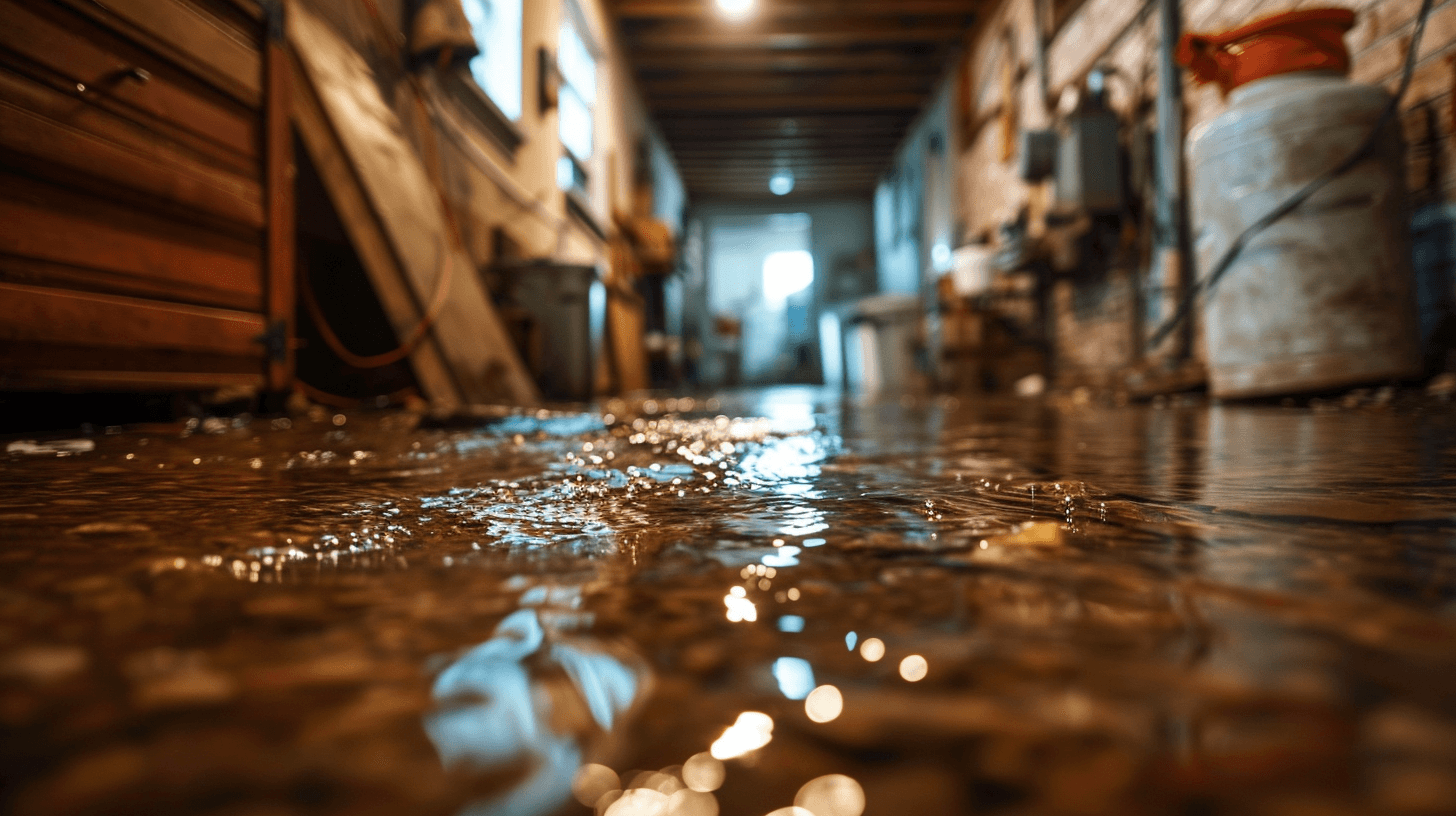
If your basement floods, you're in good company in this region — but that doesn't make it acceptable. Northeast Ohio has several compounding factors that make basement water intrusion more common and more severe than in many other parts of the country.
Clay-heavy soil. Most of Trumbull and Mahoning counties sit on glacial till — a dense, clay-rich soil deposited by the Wisconsin Glacier roughly 12,000 years ago. Clay soil doesn't drain well. When it rains, water sits on top of the clay layer and builds up hydrostatic pressure against your foundation walls. Unlike sandy or loamy soil that lets water percolate downward, clay essentially channels water sideways — right into your basement.
Spring flooding season. March through May is peak basement flooding season in Northeast Ohio. Snowmelt combines with heavy spring rains, and the ground — still partially frozen — can't absorb moisture fast enough. The Mahoning River and its tributaries have a documented history of flooding low-lying neighborhoods in Warren, Youngstown, Niles, and surrounding areas. Even homes far from rivers feel the effects through elevated water tables.
Old housing stock. A large percentage of homes in Warren, Niles, Girard, Youngstown, Struthers, and Campbell were built in the early-to-mid 1900s — many with stone or brick foundation walls that were never waterproofed. Concrete block (CMU) walls, common in 1940s–1960s construction, are naturally porous. These homes were built for an era when a damp basement was considered normal.
Let's break down the specific causes — and what actually fixes each one.
Cause 1: The Ground Slopes Toward Your Foundation
The single most common cause of basement flooding that homeowners overlook is negative grading — the ground around your home slopes toward the foundation instead of away from it.
Proper drainage requires the ground to slope away from your house at least 6 inches over the first 10 feet. Over time, settling soil, added landscaping, and organic material accumulation can reverse this slope and turn your foundation into the lowest point in the yard — a bowl that collects every drop of rainfall.
The fix: Re-grading the soil around the foundation to restore positive slope. This is typically a DIY-accessible project for moderate cases — add fill dirt, slope it properly, and seed with grass. For more severe cases, a landscaping or drainage contractor handles re-grading with equipment.
Cause 2: Gutters and Downspouts Are Failing You
Your gutter system is the first line of defense against basement flooding — and it's frequently the one that fails first.
A properly functioning gutter system collects roof runoff and directs it away from your foundation. When gutters are clogged (leaves are a major issue in Northeast Ohio's fall season), overflowing, disconnected, or missing extensions at the downspout, all that water dumps directly along your foundation wall.
A single inch of rain on a 2,000 sq ft roof produces over 1,200 gallons of water. If your gutters aren't routing that away from the house, it's all sitting against your foundation.
The fix:
- Clean gutters at least twice a year (post-leaf-fall and early spring)
- Extend downspouts at least 6–10 feet from the foundation, ideally directing water to a sloped area of the yard
- Consider underground downspout extensions or a French drain to carry water further away
- Add gutter guards if cleaning is impractical
Cause 3: Basement Window Wells Are Collecting Water
Window well flooding is common in Northeast Ohio homes. The well around a basement window acts as a small reservoir — if it doesn't drain properly, water builds up and eventually overwhelms the window frame, which on older homes is often single-pane with degraded caulking and flashing.
The fix: Window well covers (bubble-style plastic covers that keep rain out) are the simplest solution. For persistent problems, the well may need to be dug deeper and filled with gravel to improve drainage. Caulk and reseal window frames from the inside.
Cause 4: Cracks in Your Foundation Walls or Floor
Cracks are one of the most direct water entry points. Not all cracks are equally concerning, and understanding the difference matters before deciding on a fix.
Vertical Cracks
Common in poured concrete walls; usually caused by normal concrete curing shrinkage. Not typically structural but can allow water in. Inject with hydraulic cement or polyurethane foam from inside. For larger cracks or persistent seepage, excavating the exterior and applying a waterproofing membrane is more permanent.
Horizontal Cracks
Take these seriously. Horizontal cracks in block or poured concrete walls indicate lateral soil pressure — the weight of saturated clay soil pushing against the wall. This is a structural issue that can progress to wall failure if unaddressed. These typically require carbon fiber strap reinforcement or wall anchors — not just sealant.
Stair-Step Cracks (Block Walls)
Diagonal cracks following the mortar joints in concrete block walls indicate differential settling or lateral pressure. These need professional assessment — the severity ranges from cosmetic to structural.
Floor Cracks
Water seeping up through basement floor cracks is a sign of hydrostatic pressure below the slab. This is common in spring in low-lying Northeast Ohio neighborhoods. An interior drainage system (perimeter drain + sump pump) is the appropriate fix — floor crack sealant alone won't hold against active pressure.
Learn more on our Foundation Crack Repair page.
Cause 5: Your Sump Pump Isn't Keeping Up (or Has Failed)
A sump pump is the last line of defense for most Northeast Ohio basements — and it's often the reason a manageable water table situation becomes a flooded basement.
Common sump pump failure modes:
Need a Plumber or Waterproofing Expert?
Our team is available 24/7 for emergencies. Call now or schedule online.
- Power outage: Severe storms that cause the worst flooding also knock out power. Without power, most sump pumps stop working — right when you need them most. A battery backup sump pump is essentially mandatory in Northeast Ohio.
- Overwhelmed capacity: Intense storm cells can drop 2–3 inches of rain in an hour. If your pump isn't sized for your water table or your pit fills faster than the pump can discharge, it will lose ground.
- Mechanical failure: Sump pumps have a finite lifespan (7–10 years average). A pump that runs constantly during spring season will wear out faster.
- Float switch failure: The float switch triggers the pump when water rises. If it gets stuck, the pump never activates.
- Frozen or blocked discharge line: In winter, the discharge line can freeze, preventing the pump from removing water even when running.
See our Sump Pump Services page for installation, repair, and backup system options. We strongly recommend every Northeast Ohio home have a battery backup unit installed before spring flooding season.
If your sump pump failed during a storm and your basement flooded: Do not enter a flooded basement if there's any possibility that electrical outlets, appliances, or the electrical panel were submerged. Water and electricity are a fatal combination. Call us first — we can assess the situation safely.
Cause 6: Hydrostatic Pressure Through Walls and Floor
When the water table rises during heavy rain or spring snowmelt — and it rises dramatically in Northeast Ohio's clay soil — it exerts hydrostatic pressure on your foundation from all sides. This pressure can push water through porous concrete block, through hairline cracks you can't see, and up through the floor-wall joint.
This is the most serious and persistent cause of basement water intrusion, and the one that most often requires a professional waterproofing system rather than a simple DIY fix.
The solutions:
- Interior drainage system: A perimeter channel is installed around the basement floor perimeter, collecting water that enters through walls and floor and routing it to the sump pit. This doesn't stop water from entering — it manages it before it can cause damage. This is the most common and cost-effective professional solution.
- Exterior waterproofing: Excavating around the foundation, applying a waterproof membrane to the exterior wall surface, and installing exterior drain tile. More expensive and disruptive, but addresses the problem at the source.
- French drains: Perforated pipe in a gravel trench installed around the perimeter of the home at footing level, intercepting water before it reaches the walls.
Visit our Waterproofing Services page for a full overview of our basement waterproofing solutions.
The Mold Clock Starts Within 24–48 Hours
One thing Northeast Ohio homeowners often underestimate: how fast mold grows after a basement flood. According to the EPA's mold guidelines, mold can begin growing on wet building materials within 24–48 hours of water exposure. In a humid basement environment in spring, it can be faster.
This is why addressing the source of flooding — not just the symptom — is essential. A basement that repeatedly gets an inch of water every rainstorm will develop chronic mold, which can impact your home's air quality throughout the house (particularly problematic for anyone with respiratory issues or allergies).
If your basement flooded recently and you're concerned about mold, our team can assess and recommend next steps. Our water damage restoration services include drying, dehumidification, and mold prevention.
Frequently Asked Questions
Interior drainage systems for an average Northeast Ohio basement (1,000–1,500 sq ft) typically run $5,000–$12,000 installed, including a sump pump system. Exterior waterproofing costs more — often $10,000–$30,000+ depending on excavation scope. Simpler fixes like re-grading or gutter extensions can run $500–$2,000. We provide free basement inspections and detailed estimates. Financing is available through Wisetack.
Yes — and more so than in most parts of the country, given the region's clay soil, freeze-thaw cycles, and spring flooding history. Beyond protecting your belongings, a dry basement protects your home's structural integrity, prevents mold, and adds real value at resale. A chronic wet basement is a major red flag on any home inspection report in the region.
Even homes on the same block can have very different water profiles depending on micro-grading, where downspouts discharge, the age and type of their foundation, whether they have a working sump system, and their proximity to natural drainage paths. Your lot may also sit at a slightly lower elevation or have soil that was backfilled less carefully. A professional inspection can pinpoint your specific entry points.
It depends on the cause. Flooding from an internal source (burst pipe, water heater failure) is typically covered under a standard HO-3 policy. Flooding from external groundwater or surface water is generally not covered — that requires a separate National Flood Insurance Program (NFIP) policy. A water/sewer backup rider covers sump pump failure and sewer backup — and is highly recommended for Northeast Ohio homeowners. Contact the Ohio Department of Insurance with specific coverage questions.
Absolutely. Every fall and early spring, do the following: test your sump pump (pour water into the pit and verify it activates), clean your gutters, check downspout extensions, inspect your window wells, and look for any new cracks in basement walls. If your pump is more than 7–8 years old or ran constantly last spring, have it inspected and consider a battery backup. It's much less expensive than a flooded basement.
Stop Your Basement From Flooding — For Good
AK Water Works has helped hundreds of Northeast Ohio homeowners solve basement water problems in Warren, Niles, Youngstown, Boardman, Kent, and beyond. We offer free basement inspections and back our work with a lifetime transferable warranty.
Schedule a Free Inspection Call (330) 574-1507
Lifetime Transferable Warranty • BBB A+ Accredited • 4.9 Stars / 1,200+ Reviews • Financing Available
Need Help With Your Plumbing?
Our team is ready to help with any plumbing or waterproofing need.
Related Articles
Best Battery Backup Sump Pumps for NE Ohio Homes (2026 Guide)
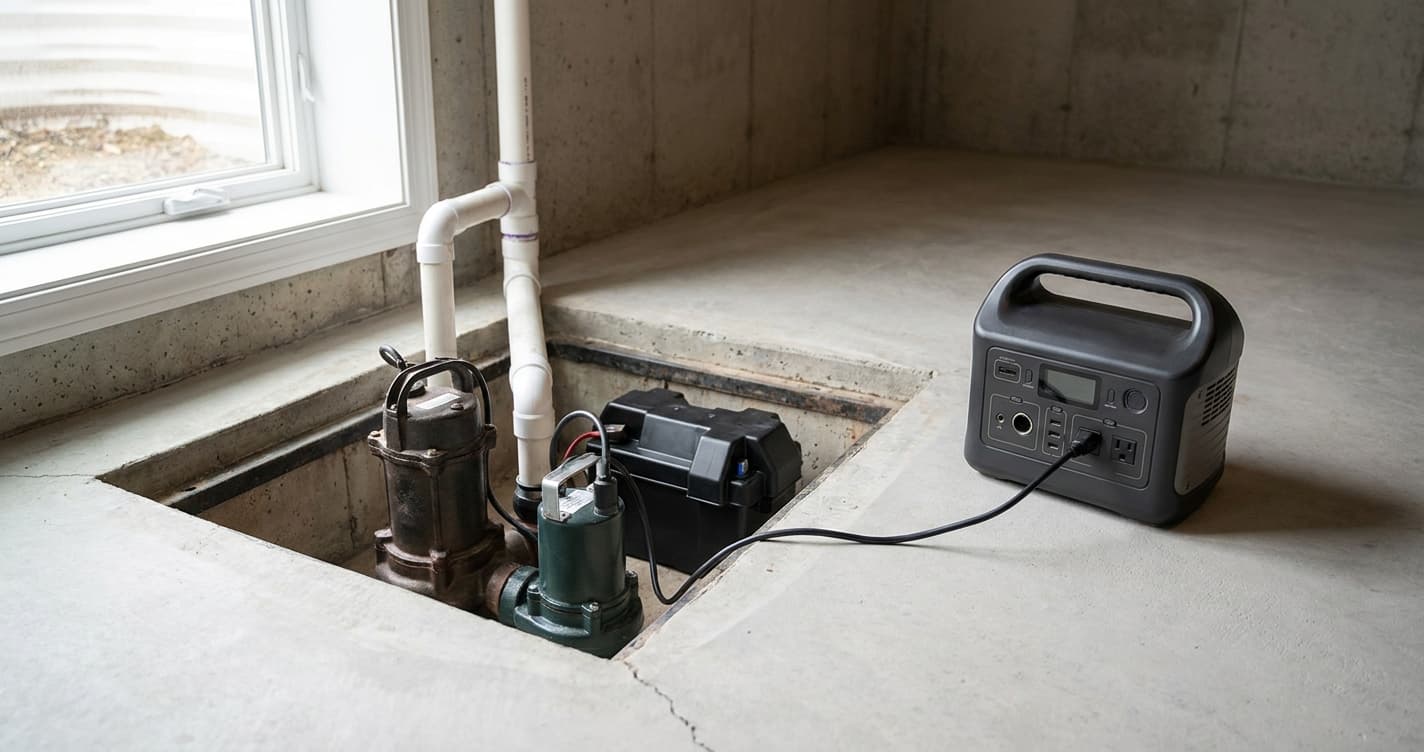
In Northeast Ohio, the power goes out exactly when your sump pump needs to run hardest. Here are the best battery backup sump pump systems, the portable power stations that can keep a pump running, and how to size the right setup for your home.
Read More
Why Trumbull & Mahoning County Homes Are Prone to Basement Flooding (And What to Do About It)
If you've lived in Trumbull or Mahoning County for any length of time, you probably know someone whose basement floods. It's not bad luck — it's geology, history, and aging infrastructure. Here's what's really happening, and what local homeowners can do about it.
Read More
The Importance of Professional Waterproofing for Boardman Ohio Basements
Professional waterproofing in Boardman, Ohio, is crucial due to the challenging weather conditions, including heavy rainfall and freeze-thaw cycles, which can compromise basement integrity. AK Water Works offers customized solutions utilizing advanced techniques to provide long-lasting protection ag
Read More