
Why Trumbull & Mahoning County Homes Are Prone to Basement Flooding (And What to Do About It)
Factor 1: The Geology — Clay All the Way Down
The most fundamental reason basements in Trumbull and Mahoning counties flood at higher rates than much of Ohio comes from what's under the ground.
About 12,000 years ago, the Wisconsin Glacier retreated through this region and left behind a thick blanket of glacial till — an unsorted mixture of clay, silt, gravel, and boulders ground up and deposited by the ice. Most of Trumbull and Mahoning counties sit on this glacial till, and its dominant component is clay.
Clay behaves differently from sandy or loamy soil in one critical way: it doesn't drain. Water sits on top of it and moves laterally instead of soaking downward. When rain falls — or snow melts — on clay-heavy ground, that water has nowhere to go except sideways. And "sideways" in this region often means directly toward your foundation walls.
The technical term is hydrostatic pressure: the weight of water-saturated soil pressing against your foundation from all sides. Northeast Ohio clay can exert enormous lateral pressure against basement walls — enough to bow concrete block inward over years, force water through hairline cracks you can't see, and push water up through the floor-wall joint.
Compare this to, say, Geauga County's eastern edge (sandy lake plain soils near Lake Erie) or parts of Summit County — same general region, meaningfully different soil profile, meaningfully lower basement flooding rates.
Factor 2: The Mahoning River and Its Tributaries
The Mahoning River runs directly through Warren and Youngstown, and its tributaries extend through Niles, Girard, Hubbard, Campbell, Struthers, and beyond. This river system has a documented flooding history going back more than a century.
The catastrophic 1913 Great Ohio Flood — one of the deadliest natural disasters in Ohio history — inundated communities throughout the Mahoning Valley, with Warren and Youngstown suffering severe damage. The flood prompted significant infrastructure investment, but the fundamental geography didn't change: many of the region's oldest residential neighborhoods were built on the river's floodplain because that's where the flat, buildable land was.
More recent flooding events include significant Mahoning River overflows in 1969, 2004 (Hurricane Ivan remnants), and 2011, plus recurring minor flooding events in low-lying neighborhoods during major spring storms.
FEMA maintains flood zone maps for the region — if your home is near the Mahoning River or its tributaries, check the FEMA Flood Map Service Center to see if you're in a designated flood zone. Homes in FEMA Zone AE (100-year floodplain) with federally backed mortgages are required to carry flood insurance — and even if you're not in a mapped zone, proximity to these waterways raises your risk during major rain events.
Even if you're not near the river directly, the broader water table across the region rises dramatically when the Mahoning and its tributaries are running high. Groundwater doesn't respect property lines.
Factor 3: Housing Built Before Waterproofing Was Standard
Trumbull and Mahoning counties have some of the oldest housing stock in the nation — a direct legacy of the region's steel and manufacturing boom from the late 1800s through the mid-20th century. Thousands of homes in Warren, Niles, Girard, Youngstown, Struthers, Campbell, and Hubbard were built between 1900 and 1950 to house the workers who filled the mills.
These homes were built in an era when:
- Rubble stone and brick foundations were common — inherently porous materials with no waterproofing membrane applied
- Concrete block (CMU) construction, prevalent in 1940s–1960s builds, creates basement walls that are like a series of open cups — the hollow cores fill with water when the water table rises
- No sump pump systems were installed — the standard practice was to let the basement get wet and dry out
- No exterior waterproofing was applied — the foundation walls were backfilled directly
Modern construction standards require exterior waterproofing membranes, proper drainage board, weeping tile at the footing, and sump pit rough-ins. Homes built after the 1990s are far better equipped against water intrusion — but they're a minority of the housing stock in this region.
If your home was built before 1970 in Trumbull or Mahoning County, it was almost certainly built without the waterproofing systems we'd consider standard today. Wet basements weren't a failure of the builder — they were simply accepted.
Factor 4: The Freeze-Thaw Cycle Makes It Worse Every Year
Northeast Ohio's winters create a damaging cycle that compounds over decades. When temperatures drop below freezing, water in the soil and in small cracks in your foundation expands as it turns to ice. When temperatures rise above freezing (which happens multiple times each winter in this region), it contracts. This freeze-thaw cycle happens dozens of times per winter.
The result: cracks get wider every year. What was a hairline crack in a 1950s poured concrete wall is, after 70 winters, a measurably wider gap. Joint mortar in block walls breaks down. The cumulative effect is a foundation that becomes progressively more water-permeable over time.
The frost depth in Trumbull and Mahoning counties reaches 36–42 inches. This means the freeze-thaw action happens well below the surface — at the same depth as your foundation footings. Ground movement from frost heave can shift foundations, crack walls, and open new gaps each spring.
Spring Is the Most Dangerous Season — and Here's Why
If you're going to have a flooding problem, spring is when it happens in this region. March through May brings the perfect storm:
- Accumulated snowpack melting — a heavy winter like those common in Northeast Ohio's snow belt leaves significant snowpack that all melts in a matter of weeks in March
- Spring rain on top of snowmelt — April often brings the heaviest rainfall of the year, arriving at the same time as snowmelt
- Still-frozen ground — the soil doesn't thaw at the same rate it warms. The top few inches thaw, but the frost layer beneath acts as an impermeable barrier, preventing percolation. Water has nowhere to go but toward your basement.
- Elevated Mahoning River and tributaries — which raises the regional water table
Need a Plumber or Waterproofing Expert?
Our team is available 24/7 for emergencies. Call now or schedule online.
The weeks between the last significant snow and Memorial Day are when the most calls for flooded basements occur across the region. Preparing your basement waterproofing systems before March is one of the most valuable home maintenance steps a Northeast Ohio homeowner can take.
By City: What You Should Know
Warren, OH
The county seat of Trumbull County sits directly on the Mahoning River. Low-lying neighborhoods near the river are in FEMA flood zones and experience the most severe groundwater rise. Much of Warren's housing stock is pre-WWII. If you're in the west side neighborhoods near the river, an active sump pump system with battery backup is essential — not optional. We serve all of Trumbull County including Warren, Howland Township, Liberty Township, and Cortland.
Niles, OH
Niles straddles both Trumbull County and the Mahoning River corridor. Significant pre-1950 housing stock concentrated near downtown and the river. Sewer infrastructure in older sections is aging. Tree root intrusion into sewer lines is a common complaint from our customers in Niles.
Youngstown, OH
Youngstown's housing stock includes some of the oldest in the region — significant neighborhoods of pre-1920 construction with stone and early brick foundations. The Mahoning River runs directly through the city. We serve Mahoning County including Youngstown, Boardman, Canfield, Poland, Austintown, and Struthers.
Boardman Township, OH
Boardman's suburban development (primarily 1950s–1980s) gives it slightly newer housing stock than Warren or Youngstown proper, but much of this era's construction still lacks modern waterproofing. Boardman's relatively flat terrain and clay soil mean drainage is still a persistent challenge for many homes.
Girard, Hubbard, Struthers, Campbell
These smaller communities share the same geological profile and aging housing stock. Many working-class neighborhoods here were built in the early steel era and haven't had foundation waterproofing added since. Sump pumps in homes without battery backup are frequently overwhelmed during spring storms.
What Actually Works for Northeast Ohio Homes
Generic waterproofing advice doesn't account for the specific conditions in this region. Here's what we've found works for homes in Trumbull and Mahoning counties:
1. Interior Drainage + Sump System (Most Common Fix)
For most homes dealing with hydrostatic pressure — water coming through walls and floor under pressure — an interior perimeter drainage system routed to a properly sized sump pit with a battery backup sump pump is the most practical and cost-effective solution. It manages the water that's going to enter regardless of soil conditions.
The battery backup is not optional in this region. Spring storms knock out power regularly — exactly when your pump needs to be running hardest.
2. Foundation Crack Repair
Existing cracks need to be addressed before or alongside any drainage solution. Injecting cracks with expanding polyurethane foam seals active water entry points. For horizontal cracks or bowing walls indicating lateral pressure, carbon fiber strap reinforcement addresses the structural issue. See our Foundation Crack Repair page.
3. Crawl Space Encapsulation (Where Applicable)
Older homes with crawl spaces — common in some areas of Mahoning County — benefit enormously from crawl space encapsulation. An open, wet crawl space pumps humidity into the living area above, creates conditions for mold and wood rot, and can significantly raise heating/cooling costs.
4. Grading and Gutter Corrections
Always address these first — they're low cost and eliminate surface water intrusion at the source. Downspout extensions should discharge at least 6 feet from the foundation, with proper grading sloping away from the house.
FAQ
Yes — and perhaps more so than homeowners expect. A chronic wet basement actively depresses home value, shows up badly on inspection reports, and creates ongoing mold and damage costs that compound over time. Fixing it once — correctly — costs less over a decade than repeated flood cleanups and remediation. It also makes your home financeable (some mortgage lenders flag water intrusion as a condition of closing) and protects your equity.
This is a legitimate question. The answer depends on what you owe, the home's value, and the scope of work needed. A basement that floods seasonally can often be solved for $5,000–$10,000 — which in many cases is a better return than selling at a discount (a known wet basement will appear in inspection reports and reduce your sale price). We offer free inspections with no obligation — call us and let's look at what's actually going on before you make any decisions.
There are limited programs. HUD-approved housing counseling agencies in both counties can help homeowners navigate repair financing options. Ohio Housing Finance Agency (OHFA) offers some home repair loan programs. Community Development Block Grant (CDBG) funds sometimes flow through county and city offices for low-to-moderate income homeowners. Call your county's community development office for current availability. We also offer financing through Wisetack for qualified homeowners.
You can check using the FEMA Flood Map Service Center — just enter your address. Homes near the Mahoning River and its tributaries are more likely to be in designated flood zones. If you're in Zone AE, flood insurance may be required by your mortgage lender and is strongly recommended.
Serving Warren, Youngstown, Niles, Boardman & All of NE Ohio
AK Water Works is based in Warren and understands exactly what Northeast Ohio basements face — because we fix them every week. Free inspections, lifetime transferable warranty, and financing available.
Schedule Your Free Inspection Call (330) 574-1507
Family-Owned • Founded in Warren, OH • OH LIC# 49341 • BBB A+ • 4.9 Stars / 1,200+ Reviews
Need Help With Your Plumbing?
Our team is ready to help with any plumbing or waterproofing need.
Related Articles
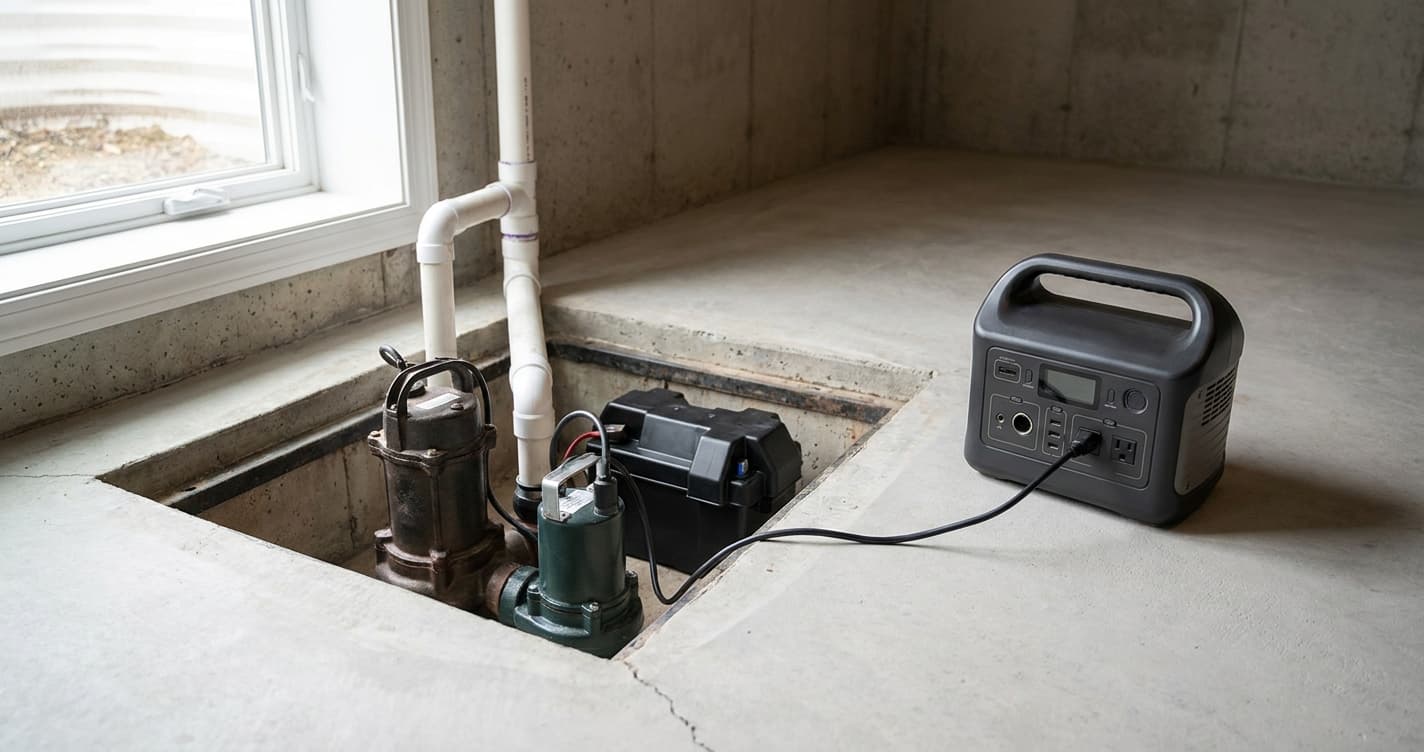
Best Battery Backup Sump Pumps for NE Ohio Homes (2026 Guide)
In Northeast Ohio, the power goes out exactly when your sump pump needs to run hardest. Here are the best battery backup sump pump systems, the portable power stations that can keep a pump running, and how to size the right setup for your home.
Read More
Why Does My Basement Flood When It Rains? Causes & How to Fix It for Good
A basement that floods every time it rains isn't just inconvenient — it's actively damaging your home's structure, your belongings, and your air quality. Here are the six most common causes and what actually fixes each one.
Read More
The Importance of Professional Waterproofing for Boardman Ohio Basements
Professional waterproofing in Boardman, Ohio, is crucial due to the challenging weather conditions, including heavy rainfall and freeze-thaw cycles, which can compromise basement integrity. AK Water Works offers customized solutions utilizing advanced techniques to provide long-lasting protection ag
Read More