
Tree Roots in Your Sewer Line: Options, Costs & How to Prevent Them Coming Back
Why Northeast Ohio Has a Particularly Bad Tree Root Problem
Root intrusion into sewer lines is a nationwide problem, but it hits Northeast Ohio harder than many regions — and there are specific reasons for that.
Old Terra Cotta Pipes
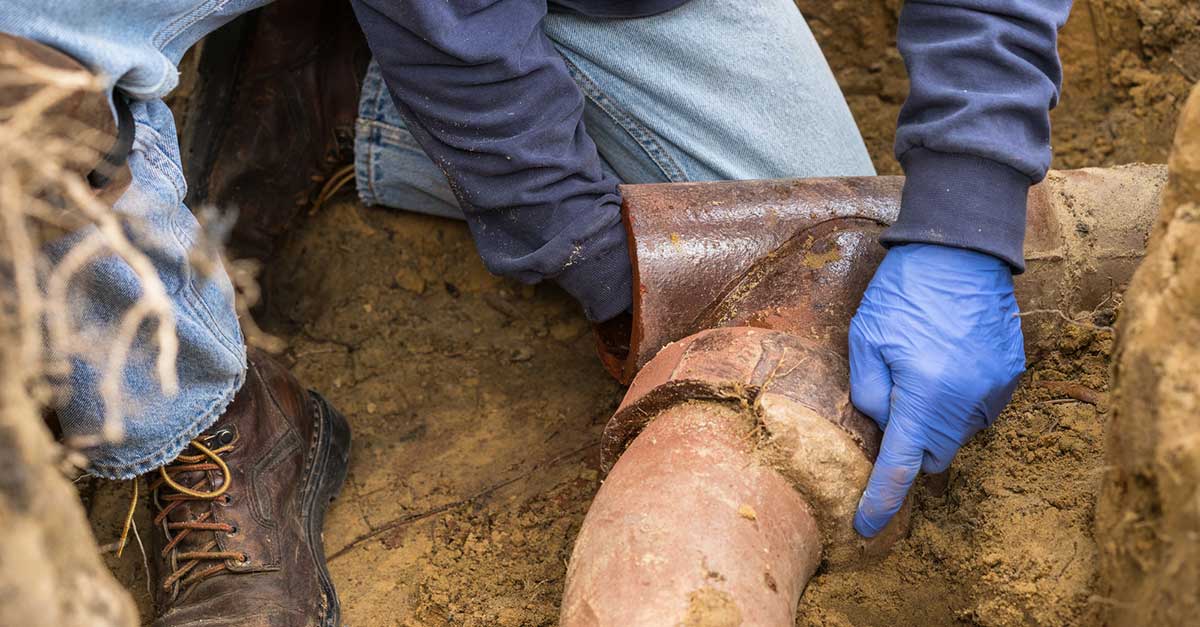
Much of the sewer infrastructure in Warren, Niles, Youngstown, Girard, and older Mahoning County neighborhoods was installed in the early-to-mid 1900s using clay terra cotta pipe. These pipes were installed in short sections with bell-and-spigot joints sealed only with oakum and mortar. Over decades, those joints crack, shift, and open up — creating exactly the kind of moisture-rich gap that tree roots actively seek out.
Modern PVC sewer pipe, by contrast, is installed in long sections with watertight gasket joints that give roots virtually no entry point. If your home was built before 1970, there's a meaningful chance your sewer lateral is still original terra cotta.
Regional Tree Species
Northeast Ohio's urban tree canopy is dominated by species with aggressive root systems. Silver maple — common in older neighborhoods throughout Trumbull and Mahoning counties — has shallow, wide-spreading roots that are drawn to water sources. Willow trees, common near the Mahoning River and its tributaries, are notorious for seeking out sewer lines from remarkable distances. Both are among the most frequently cited causes of residential sewer backups in the region.
Freeze-Thaw Cycles Open the Door
Every winter, Northeast Ohio's freeze-thaw cycles stress underground pipes. Ground movement from frost heave widens cracks and joint gaps — making existing vulnerabilities worse every year, and giving roots new entry points each spring.
Signs You Have Tree Roots in Your Sewer Line
Tree roots grow slowly and silently — by the time you notice symptoms, they've often been in the pipe for years.
- Multiple slow drains at once — if one drain is slow, it's probably that drain's trap or branch line. If all your drains run slow simultaneously, that's the main sewer line.
- Gurgling sounds from toilets or floor drains, especially after running water elsewhere in the house
- Sewage backing up into your basement floor drain or bathtub — the most serious symptom
- Recurring clogs in the same line despite repeated clearing
- Lush patches of green grass over the sewer line path in your yard (roots and leaked nutrients feeding the grass)
- Sinkholes or soft spots in the yard above the pipe
Don't ignore a basement backup. Raw sewage contains bacteria including E. coli, hepatitis A, and other pathogens. A sewer backup in your basement is a biohazard situation — don't walk through it or try to clean it up without proper protection. Call us immediately at (330) 574-1507.
The definitive way to diagnose root intrusion is a sewer camera inspection. We feed a waterproof camera through your clean-out into the sewer line and can see exactly what's happening — where the roots are, how extensive the intrusion is, and whether the pipe itself is cracked or collapsed.
Your Repair Options, Explained
The right approach depends on two things: how much root growth is present, and how damaged the pipe is.
Option 1: Mechanical Root Cutting (Auger)
A motorized auger — also called a drain snake — has a rotating blade head that physically cuts roots away from the pipe walls. This clears the immediate blockage and restores flow. It's the lowest-cost option but only treats the symptom: roots grow back, typically within 1–3 years depending on the tree species and how aggressively the roots are growing.
Best for: Minor root intrusion, pipe in good structural condition, budget-conscious short-term fix
Option 2: Hydro-Jetting
Hydro-jetting uses extremely high-pressure water (up to 4,000 PSI) to blast roots, grease, and debris from the pipe walls. It's more thorough than mechanical cutting — it flushes the removed material out of the line rather than just cutting through it. Hydro-jetting is often combined with root cutting for a more complete clean.
Best for: Moderate root intrusion, heavy grease or debris alongside roots, pre-lining pipe prep
Important caveat: Hydro-jetting should not be used on pipes that are already cracked or structurally compromised — the pressure can worsen the damage. A camera inspection first is essential.
Option 3: Trenchless Pipe Lining (CIPP)
If roots have cracked or damaged the pipe, clearing the roots alone won't solve the problem — they'll find the same cracks again. Cured-in-place pipe lining (CIPP) is a trenchless repair method where a flexible liner saturated with resin is inserted into the damaged pipe. It's inflated against the pipe walls, the resin cures, and you're left with a smooth new pipe surface inside the old one — fully sealing cracks and eliminating root entry points.
Best for: Cracked or damaged pipes that are otherwise in good shape, homeowners who want to avoid yard excavation, long-term root prevention
CIPP typically costs more upfront than clearing alone, but it's significantly less disruptive than digging — no torn-up yard, no replaced landscaping, often done in one day.
Option 4: Full Pipe Replacement (Excavation)
When a pipe is collapsed, severely misaligned, or has multiple failure points, full replacement via excavation is the only viable option. The old pipe is dug up and replaced with modern PVC. This is the most invasive and costly option but is sometimes necessary — particularly with very old terra cotta lines in advanced deterioration.
Best for: Collapsed sections, severe root damage, pipes near end of useful life, combined sewer/lateral replacement
| Method | Root Removal? | Fixes Pipe Damage? | Excavation? | Longevity |
|---|---|---|---|---|
| Auger / Mechanical Cutting | Yes | No | No | 1–3 years until regrowth |
| Hydro-Jetting | Yes | No | No | 1–3 years until regrowth |
| Pipe Lining (CIPP) | Yes (after clearing) | Yes | Minimal | 50+ years |
| Full Replacement | Yes | Yes | Full | 50+ years |
What Does Root Removal Cost in Northeast Ohio?
Need a Plumber or Waterproofing Expert?
Our team is available 24/7 for emergencies. Call now or schedule online.
Costs vary by the severity of intrusion, method used, and length of pipe affected. Here are realistic ranges for the Trumbull/Mahoning County area:
| Service | Typical Cost Range | Notes |
|---|---|---|
| Sewer camera inspection | $150–$350 | Essential first step; often credited toward repair |
| Mechanical root cutting (auger) | $200–$600 | Depends on depth and access |
| Hydro-jetting | $350–$900 | More thorough; longer-lasting |
| Pipe lining (CIPP) — per foot | $80–$250/ft | Most laterals 40–80 ft; expect $5,000–$15,000 total |
| Pipe replacement (excavation) | $3,000–$15,000+ | Highly variable based on depth, length, landscaping |
Note: Who owns the sewer lateral matters for cost. You (the homeowner) own the pipe from your house to the property line — or in some municipalities, to the main sewer. The city owns it from that point forward. Check with your local municipality if you're unsure. Trumbull County Sanitary Engineering and Mahoning County Sanitary Engineering can clarify boundary responsibility.
Does Homeowners Insurance Cover Root Removal?
Standard Ohio HO-3 homeowners policies generally do not cover sewer line root damage — it's considered a maintenance issue. However, if roots cause a sewage backup that damages your home's interior, you may have coverage under a water/sewer backup rider (a common add-on in Northeast Ohio given the region's flooding history). Check your policy or contact the Ohio Department of Insurance with questions.
How to Stop Roots From Coming Back
Root Inhibitor Foam Treatment
After mechanical clearing, a foam product containing dichlobenil or metam sodium can be applied to the inside of the pipe. The foam coats the pipe walls and kills roots on contact, then inhibits new growth for up to 2 years. This is a cost-effective addition to a routine clearing job.
Copper Sulfate Treatments
Copper sulfate crystals flushed through the sewer system work similarly — roots absorb the copper and it kills them. However, this approach can be environmentally restricted in some Ohio municipalities due to potential impact on wastewater treatment. Ask us whether this is appropriate for your situation.
Pipe Lining or Replacement
The only permanent solution is eliminating the entry points. A properly installed CIPP liner or new PVC pipe with watertight joints gives roots nowhere to enter. This is the recommended long-term solution for pipes with documented root history.
Strategic Tree Placement
If you're planting new trees, keep them at least 10 feet from your sewer lateral — and 20+ feet for high-risk species like silver maple, willow, and cottonwood. Consult your county's Ohio EPA Northeast District resources for guidance on tree selection near water infrastructure.
Trees Most Likely to Attack Your Sewer Line in NE Ohio
| Tree Species | Root Aggression | Common In |
|---|---|---|
| Silver Maple (Acer saccharinum) | Very High | Throughout Trumbull & Mahoning counties |
| Willow (Salix spp.) | Extreme | Near Mahoning River, low-lying areas |
| Cottonwood (Populus deltoides) | High | River corridors, older neighborhoods |
| Box Elder (Acer negundo) | Moderate-High | Disturbed lots, urban areas |
| American Elm | Moderate | Older urban neighborhoods |
| White Ash | Low-Moderate | Widespread; ash borer has reduced population |
| Dogwood, Serviceberry, Redbud | Low | Ornamental plantings; safer near pipes |
Frequently Asked Questions
It depends on the tree species and how aggressive the root growth is. Most homeowners see regrowth within 1–3 years after mechanical clearing. Root inhibitor treatments can extend this. The only permanent fix is eliminating the entry points through pipe lining or replacement.
Removing the tree stops new root growth, but roots already in your pipe don't die immediately — they can continue to cause problems for some time. Cutting the tree also doesn't remove roots already inside the pipe. You'll still need to address the pipe itself. That said, removing a problem tree is worth considering alongside pipe repair if the tree is causing ongoing damage.
CIPP lining, when properly installed, has a rated service life of 50+ years and creates a smooth, jointless new surface that roots cannot penetrate. It does slightly reduce pipe diameter (by about the thickness of the liner, typically a quarter-inch or so), but this rarely affects flow capacity in residential applications. It's a legitimate, permanent solution — not a patch.
Yes, strongly recommended — especially for homes built before 1970 in Northeast Ohio. A pre-purchase sewer scope is one of the most valuable inspections you can add to a home inspection, often costing $150–$350. Finding root intrusion or a collapsed line before closing gives you negotiating power or saves you from a very expensive surprise. Learn more about our sewer camera inspection service.
The best way is a camera inspection — we can see the pipe material. As a general rule of thumb: if your home was built before 1970, there's a good chance the sewer lateral is original terra cotta. Homes built in the 1970s–1980s often have ABS plastic. Anything newer is typically PVC. Terra cotta lines in the region are frequently approaching 70–100+ years of age and deserve careful monitoring.
Sewer Problems in Trumbull or Mahoning County?
AK Water Works offers sewer camera inspections, drain cleaning, hydro-jetting, root removal, and trenchless pipe repair throughout Northeast Ohio — including Warren, Niles, Youngstown, Boardman, Kent, and beyond.
Schedule a Camera Inspection Call (330) 574-1507
24/7 Emergency Service • BBB A+ Accredited • 4.9 Stars / 924+ Reviews • OH LIC# 49341
Need Help With Your Plumbing?
Our team is ready to help with any plumbing or waterproofing need.
Related Articles

Clay Drains: Warren & Niles
Homes built before 1980 in Warren and Niles are far more likely to have clay or cast iron drain lines that are cracking, corroding, or full of roots. A camera inspection is the only way to know what is actually down there.
Read More
Summer Drain Clogs Explained
If your outdoor drain clogs every summer in Warren or Trumbull County, tree root regrowth is likely the cause. Learn how the seasonal root cycle works and what warning signs to watch for before a slow drain becomes a flooded yard.
Read More
Why Timely Drain Cleaning Matters for Boardman Ohio Residents
Timely drain cleaning is essential for Boardman, Ohio, residents as it prevents major plumbing issues and costly repairs. By keeping drains clear, we prevent clogs that can lead to flooding, water damage, and health risks such as mold growth. Professional cleaning enhances home hygiene by eliminatin
Read More